Proactive Peace: Handling Reactive Behaviour for a Safer Grooming Experience
Practical strategies for Hong Kong pet groomers to safely and effectively manage reactive dogs, ensuring a calmer experience for everyone.
In the bustling environment of a Hong Kong pet grooming salon, encountering dogs that display reactive behaviour is a common challenge. Reactive behaviour, often stemming from fear, anxiety, or overstimulation, can manifest as excessive barking, lunging, snapping, or trying to escape. For groomers, managing such behaviour safely and effectively is paramount, not only for the dog's well-being but also for the safety of staff and maintaining a professional salon atmosphere. This article offers practical strategies to transform potentially stressful grooming sessions into more manageable, even positive, experiences.
Understanding the Roots of Reactivity
Before implementing strategies, it's crucial to understand why a dog might be reactive. Common triggers in a grooming setting include:
- Fear and Anxiety: Unfamiliar environments, sounds (clippers, dryers), or people can be overwhelming.
- Past Negative Experiences: Previous painful or frightening grooming sessions can lead to learned reactivity.
- Overstimulation: Too many sights, sounds, and smells in a busy salon can push a dog over its threshold.
- Pain or Discomfort: An underlying medical condition or discomfort during handling can cause a dog to react defensively.
Pre-Grooming Preparation: Setting the Stage for Success
Thorough Client Communication
- Detailed Intake Forms: Implement forms that specifically ask about a dog's behaviour history, triggers, and previous grooming experiences.
- Pre-Grooming Consultation: For known reactive dogs, schedule a brief, low-stress meet-and-greet outside of peak hours. This allows the dog to acclimate slightly and for you to observe their initial reactions.
- Educate Owners: Advise owners on preparing their dog at home, such as practising handling paws, ears, and faces, and associating these with positive reinforcement.
Strategic Scheduling
Book reactive dogs during quieter periods—first appointment of the day, last appointment, or mid-day lulls. This minimises external stressors and allows for a calmer, more focused approach.
During the Grooming Session: Techniques for Calmness and Safety
Create a Calming Environment
- Minimise Sensory Overload: Use visual barriers (screens), turn down loud music, or consider noise-reducing ear covers for the dog.
- Calming Aids: For some dogs, a calming pheromone spray or a thundershirt/calming wrap might help reduce anxiety.
Gentle and Confident Handling
Your own calm and confident demeanour is contagious. Move slowly, speak in a soothing voice, and avoid sudden movements. Use secure but gentle restraint techniques. If the dog is showing escalating signs of stress, take a break.
Positive Reinforcement
High-value treats are your best friend. Reward calm behaviour, even small moments of stillness. Associate grooming tools with treats. For example, show the brush, give a treat; touch with the brush, give a treat.
Strategic Tool Use
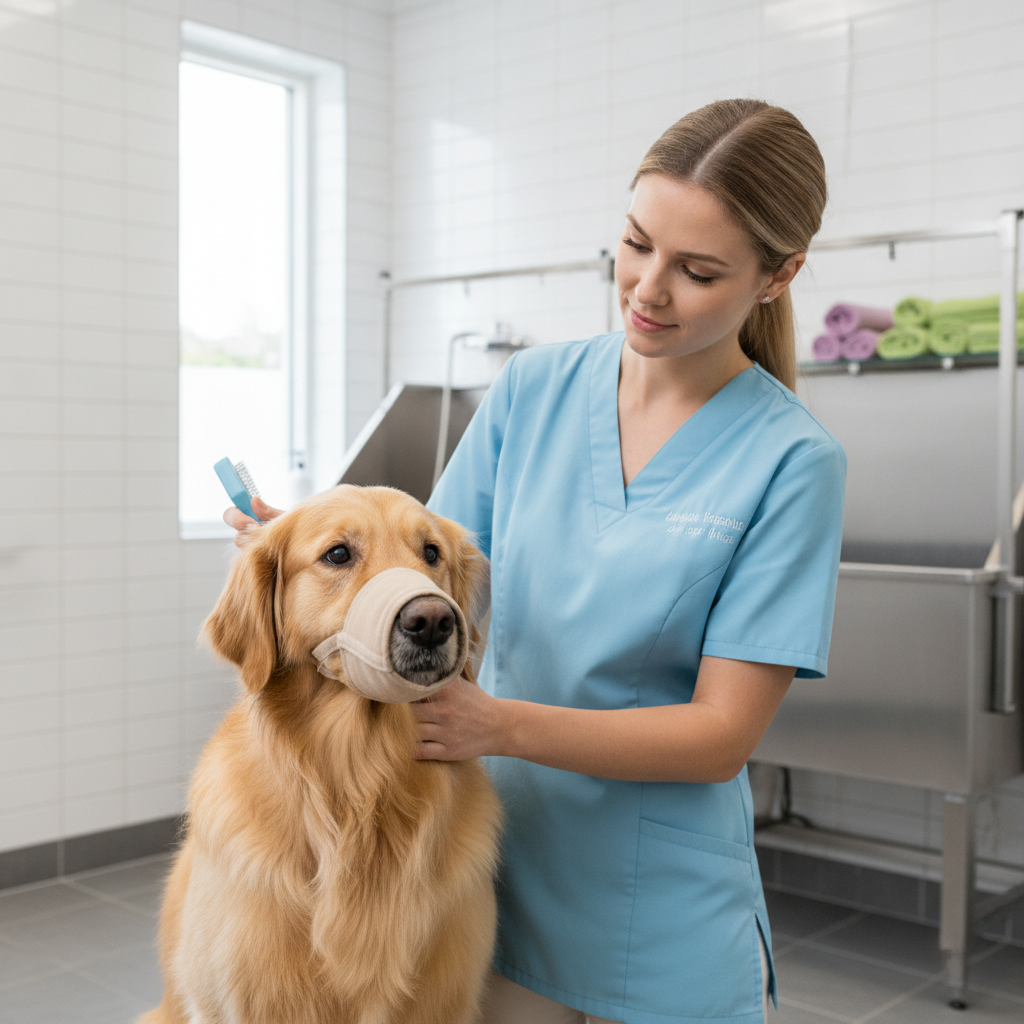
- Muzzles: For safety, a properly fitted muzzle is essential for some reactive dogs. Introduce it positively, associating it with treats, rather than forcing it on.
- Grooming Loops & Tethers: Ensure these are secure but never used for force. They are for safety and positioning, not punishment.
Know When to Stop
There are times when a grooming session must be cut short for the dog's safety and well-being, or your own. Communicate transparently with the owner about the dog's limits and suggest further training or vet consultation if needed.
Post-Grooming and Follow-Up
Provide owners with clear feedback on their dog's behaviour during the groom. Suggest strategies for continued desensitisation at home and discuss potential next steps, such as shorter, more frequent appointments or even professional behaviourist consultation.
Conclusion
Managing reactive dogs requires patience, empathy, and a systematic approach. By proactively understanding triggers, preparing the environment, and employing gentle, positive techniques, Hong Kong groomers can create safer, less stressful experiences for these challenging clients, ultimately strengthening client trust and enhancing your salon's reputation for compassionate care.
#Dog Behaviour #Grooming Safety #Reactive Dogs #Client Management #Professional Grooming