Mastering Positive Reinforcement: Calming Anxious Pets for Stress-Free Grooming
Learn how to use positive reinforcement techniques to reduce stress and anxiety in pets during grooming, fostering a calmer experience for everyone.
In the bustling environment of a Hong Kong pet grooming salon, managing pets with anxiety or fear is a common yet critical challenge. A stressed pet not only makes the grooming process more difficult and prolonged but can also pose safety risks to both the animal and the groomer. Mastering positive reinforcement techniques is not just about making pets happier; it’s about fostering trust, ensuring safety, and building a loyal client base.
Understanding Canine Stress Signals
The first step to calming an anxious pet is recognizing the signs of stress. Dogs communicate their discomfort in subtle ways before escalating to more overt reactions. Being attuned to these signals allows groomers to intervene early and adjust their approach:
- Lip Licking & Yawning: Often out of context, these are self-calming behaviors.
- Whale Eye: The whites of the eyes are visible, indicating tension or fear.
- Body Stiffening & Trembling: A rigid posture or involuntary shaking suggests apprehension.
- Panting (without exertion) & Drooling: Can be signs of stress, not just heat.
- Cowering, Hiding, or Trying to Escape: Clear attempts to avoid the situation.
Foundations of Positive Reinforcement
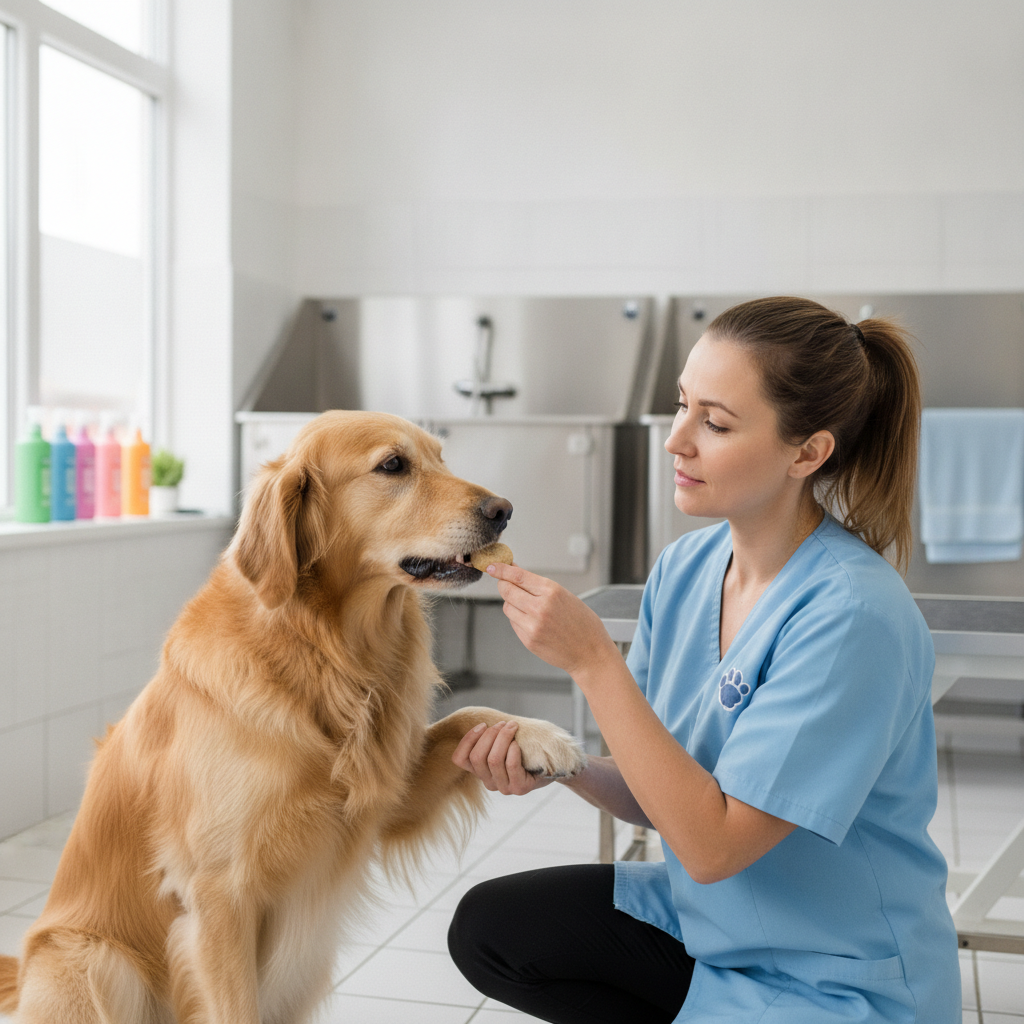
Positive reinforcement involves adding something desirable to the environment to increase the likelihood of a desired behavior recurring. In grooming, this means associating potentially stressful procedures with pleasant experiences. The key is to deliver rewards immediately after the desired behavior (e.g., standing still, tolerating a touch) to create a clear connection.
Key Techniques in the Salon
- Gentle Introductions: Allow new or anxious pets a few moments to explore the salon environment, sniffing around and getting comfortable. Use a calm, reassuring voice and avoid immediate, intense physical contact.
- High-Value Rewards: Identify what motivates each individual pet. For some, it might be a specific treat (e.g., freeze-dried liver, cheese), for others, a favourite toy or enthusiastic verbal praise. Keep these rewards exclusive to grooming sessions to maximize their value.
- Short, Positive Sessions: Break down grooming tasks into smaller, manageable steps. If a pet shows signs of stress, take a break. End each session on a positive note, even if it means only completing a small part of the groom, to build a positive association with the salon.
- Desensitization and Counter-Conditioning: Gradually expose the pet to potentially frightening stimuli (like the sound of clippers, the feeling of water, or nail trims), pairing each exposure with high-value treats or praise. Start at a distance or low intensity and slowly decrease the distance or increase intensity as the pet shows comfort.
- Calming Aids: For highly anxious pets, consider discussing with owners the use of calming aids such as pheromone diffusers, Thundershirts, or vet-recommended calming supplements. These should always be used as an adjunct to, not a replacement for, positive reinforcement techniques.
- Groomer's Body Language & Tone: Your calm demeanor, soft voice, and slow, deliberate movements can significantly impact a pet's comfort level. Avoid direct, prolonged eye contact, which can be perceived as a threat.
Consistency and Communication
For positive reinforcement to be truly effective, consistency across all staff members is crucial. Ensure every groomer understands and applies these techniques uniformly. Furthermore, open communication with pet owners is vital. Share insights into their pet's behavior during grooming and suggest strategies they can practice at home to reinforce positive associations.
By investing time and patience in mastering positive reinforcement, Hong Kong pet grooming salons can transform potentially stressful experiences into comfortable, even enjoyable, visits. This not only enhances animal welfare but also strengthens the bond with clients, fostering a reputation for compassionate and skilled care.
#Pet Behavior #Positive Reinforcement #Grooming Techniques #Canine Anxiety #Salon Management
Run your grooming shop on PettoBook — 14-day free Pro trial, no card