Building Positive Associations: Counter-Conditioning for Challenging Grooming Behaviors
Learn proactive counter-conditioning and desensitization techniques to transform challenging grooming behaviors into positive, stress-free experiences for dogs.
Building Positive Associations: Counter-Conditioning for Challenging Grooming Behaviors
As pet grooming professionals, we frequently encounter dogs who find aspects of the grooming process stressful, fearful, or even aggressive. While patience and a gentle touch are invaluable, sometimes these alone aren't enough to truly transform a dog's experience. This is where the powerful behavioral modification techniques of counter-conditioning and desensitization become indispensable tools in your salon.
Understanding Counter-Conditioning and Desensitization
Desensitization (DS) involves gradually exposing a dog to a stimulus (like the sound of clippers or the feel of water) at such a low level that it doesn't provoke a negative reaction. Over time, the intensity is slowly increased, helping the dog to become less reactive to the trigger.
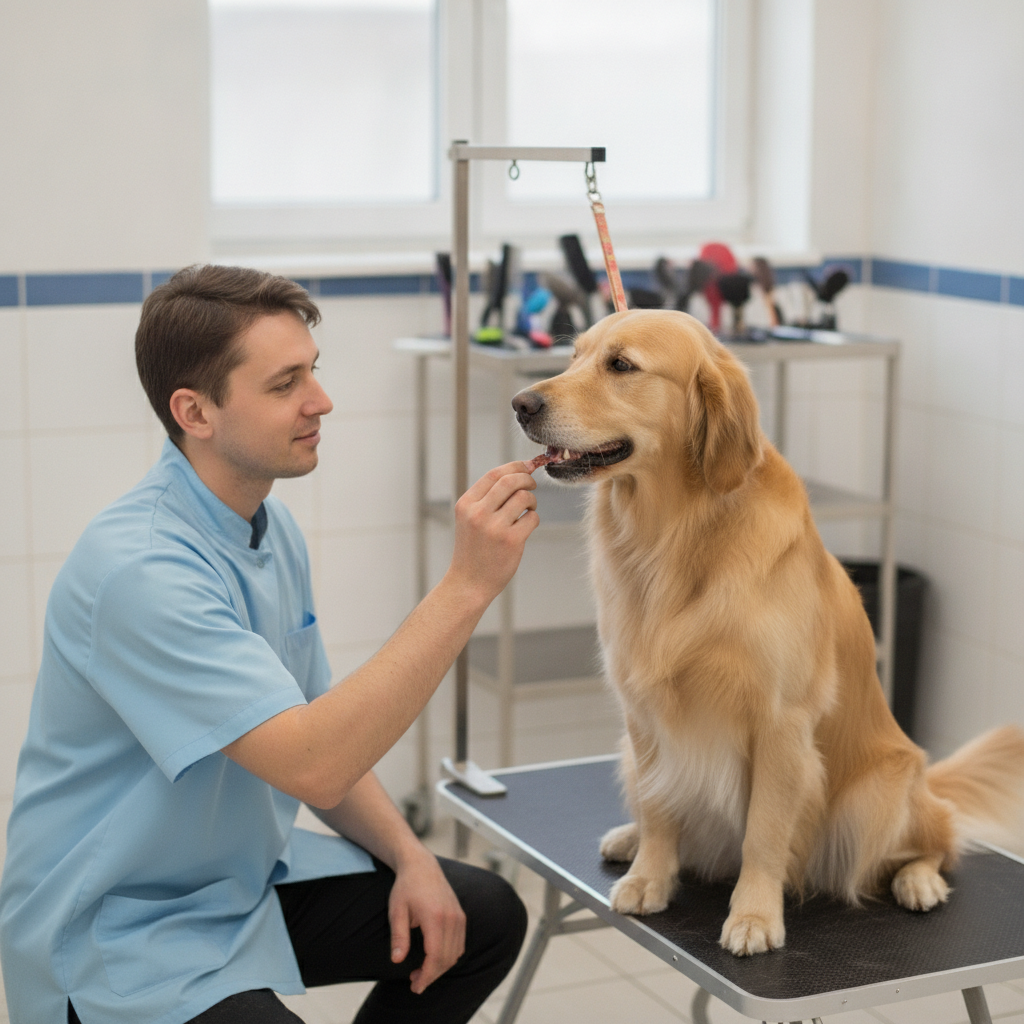
Counter-Conditioning (CC), often used in conjunction with desensitization, aims to change a dog's emotional response to a specific trigger from negative (fear, anxiety, aggression) to positive. This is achieved by pairing the trigger with something the dog loves, such as high-value treats, praise, or gentle massage. The goal is for the dog to associate the previously feared item or action with something good.
Why These Techniques are Crucial for Groomers
Implementing CC and DS offers significant benefits:
- Enhanced Safety: A calmer dog is less likely to bite, scratch, or injure themselves or the groomer.
- Reduced Stress: Minimizes anxiety for the dog, making the experience more humane and pleasant.
- Improved Efficiency: Dogs who cooperate require less time and effort to groom.
- Client Trust and Retention: Owners appreciate a salon that prioritizes their pet's emotional well-being, leading to loyalty and positive referrals.
- Professional Development: Equips your team with advanced skills to handle a wider range of temperaments.
Practical Application in Your Salon
Here’s how to integrate counter-conditioning and desensitization into your daily grooming practice:
1. Identify Triggers and Baseline Reaction
Before beginning, observe the dog carefully. What specific actions or tools provoke fear? Is it the bath nozzle, the dryer's noise, nail trimming, or being handled in certain areas? Note the dog's current stress signals at the lowest intensity of the trigger.
2. Start Small and Pair with Positives
Introduce the feared stimulus at a very low intensity, just below the dog's threshold for a negative reaction. For instance:
- For nail trims: Simply show the clippers from a distance, then immediately offer a high-value treat. Repeat. Gradually, touch the clippers to a paw, then treat. Always pair the stimulus with something positive.
- For blow dryers: Start with the dryer off, then turn it on at the lowest setting from across the room. As soon as the sound begins, offer treats. Slowly decrease the distance and increase intensity, ensuring the dog remains calm and happy.
- For bathing: Use a shallow amount of warm water. Introduce water to paws with treats. Gradually increase contact, always associating it with positive reinforcement.
3. Gradual Progression and Short Sessions
Increase the intensity, duration, or proximity of the trigger in tiny, manageable steps. Always watch the dog’s body language closely. If they show signs of stress (lip licking, yawning, stiffening, averting gaze), you’ve gone too far. Retreat to an easier step and try again. Keep sessions very short – often just a few minutes – and always try to end on a positive note.
4. Client Education and Consistency
Educate pet owners on these techniques and encourage them to continue positive association exercises at home between grooming appointments. Consistency is key to long-term success.
Safety First
While counter-conditioning is powerful, safety remains paramount. For dogs with severe fear or aggression, always use appropriate safety measures like muzzles when necessary. However, remember that a muzzle is a management tool, not a solution for the underlying fear. CC and DS aim to address the root cause.
By investing time and effort in counter-conditioning and desensitization, you not only create a safer, more positive environment for the dogs in your care but also elevate your salon's reputation as a compassionate and skilled professional establishment.
#Dog Behavior #Grooming Techniques #Counter-Conditioning #Desensitization #Positive Reinforcement
Run your grooming shop on PettoBook — 14-day free Pro trial, no card