Beyond the Brush: Proactive Health Checks in Every Grooming Session
Learn how Hong Kong pet groomers can integrate proactive health checks into every session to identify potential issues and enhance pet safety.
Beyond the Brush: Proactive Health Checks in Every Grooming Session
As pet grooming professionals in Hong Kong, our role extends far beyond merely styling fur and trimming nails. We are often the first line of observation for a pet's overall health and well-being. During a typical grooming session, pets are handled extensively, allowing groomers a unique opportunity to identify subtle changes or potential health issues that owners might overlook. Integrating proactive health checks into your salon's routine not only enhances pet safety but also elevates your service quality and builds invaluable trust with your clientele.
The Groomer's Unique Vantage Point
Unlike veterinarians, groomers spend prolonged periods interacting physically with pets, examining every inch of their body. This hands-on approach positions us perfectly to spot early warning signs. By developing a systematic approach to observation, you can transform each grooming session into a mini-wellness check.
Key Areas for Vigilant Observation:
- Skin and Coat Health: While brushing, look for more than just mats and tangles. Check for redness, rashes, bumps, lumps, parasites (fleas, ticks), dry flaky skin, hot spots, or unusual hair loss patterns. Pay attention to any strong or unusual odors emanating from the skin.
- Ears: Gently inspect the ear canals for excessive wax buildup, redness, swelling, discharge, or a foul odor. Note if the pet frequently shakes its head or scratches its ears. These can indicate infections or mites.
- Eyes: Observe for redness, discharge (clear, yellow, or green), cloudiness, swelling around the eyes, or signs of discomfort like squinting.
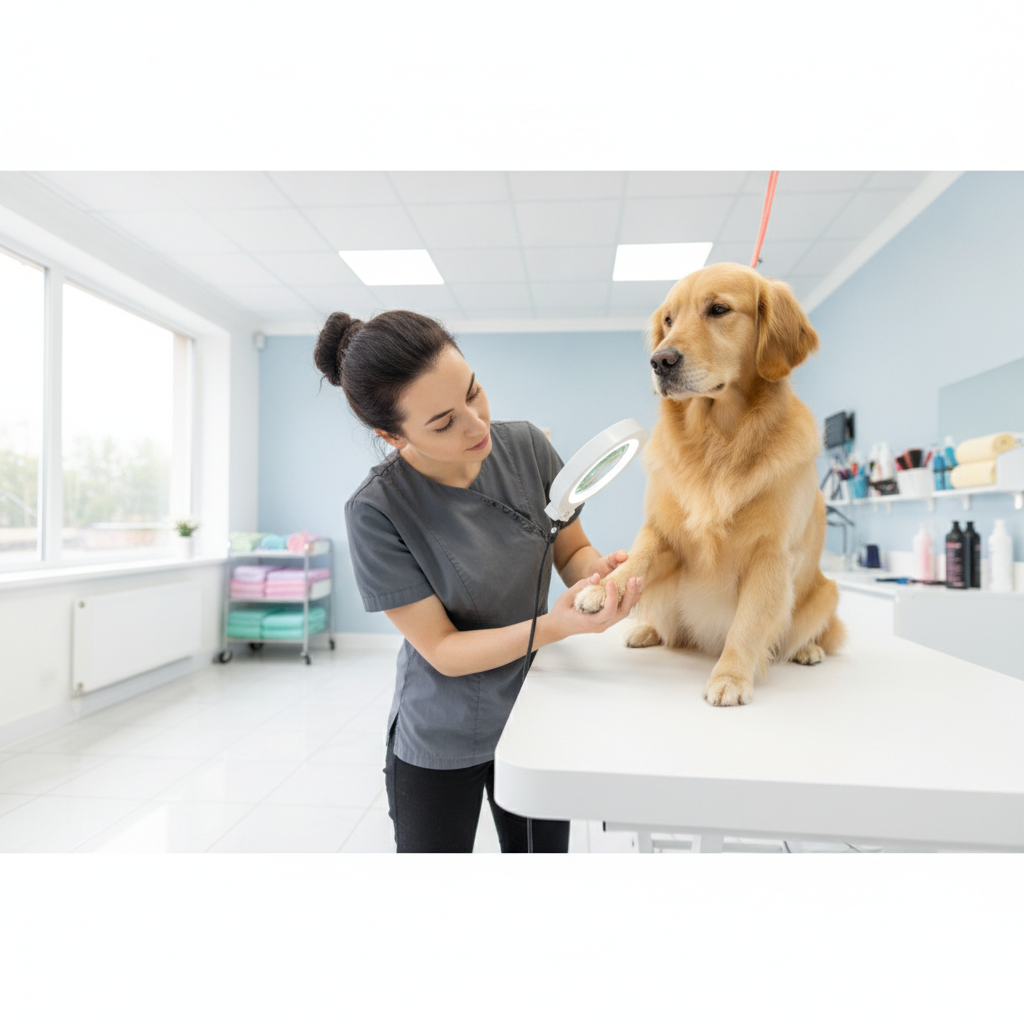
- Paws and Nails: Examine pads for cracks, cuts, foreign objects, or swelling. Check nails for length, embedded growth, or any signs of infection around the nail bed. Note if the pet shows sensitivity when paws are handled.
- Dental Health (Observation Only): While you won't be performing dental cleanings, a quick look at the gums for redness or swelling, and teeth for excessive tartar buildup or broken teeth, can prompt a recommendation for veterinary dental care.
- Behavioral Changes: A pet's demeanor can speak volumes. Is the dog unusually lethargic, aggressive, anxious, or showing signs of pain when touched in certain areas? Documenting these changes is crucial, especially if they differ from previous visits.
- Body Condition: Note any sudden significant weight loss or gain, or unusual changes in muscle mass.
Implementing a Protocol for Findings:
When you identify a potential issue, clear communication and a structured protocol are essential:
- Document Thoroughly: Keep detailed records of your observations for each pet. This includes location, size, color, and any associated behaviors.
- Communicate Professionally with Owners: Do not diagnose. Instead, describe your observations factually and recommend that they consult their veterinarian for a professional assessment. For example, "I noticed a small red patch on Fluffy's inner thigh that looks irritated; it might be worth having your vet take a look."
- Adjust Grooming Plan: If the condition makes grooming painful or risky (e.g., a hot spot, an open wound), communicate this to the owner and adjust the grooming approach or even reschedule if necessary. Prioritize the pet's comfort and safety above all else.
Building Trust and Reputation
By actively incorporating these health checks, you demonstrate a deep commitment to the pets in your care. This proactive approach not only safeguards the animals but also builds stronger relationships with owners, positioning your salon as a trusted partner in their pet's overall wellness journey. In Hong Kong's competitive market, this level of care can be a significant differentiator, fostering client loyalty and enhancing your professional reputation.
#Pet Safety #Grooming Health #Risk Management #Early Detection #Salon Protocol
Run your grooming shop on PettoBook — 14-day free Pro trial, no card