Beyond Restraint: Cultivating Trust with Anxious Dogs in Your Grooming Salon
Learn proactive strategies to build trust and positive associations with anxious or reactive dogs, ensuring safer, more stress-free grooming sessions.
Introduction: Beyond the Snip and Trim
As a professional pet groomer, you encounter dogs of all temperaments every day. Among them, grooming anxious or reactive dogs presents a unique set of challenges. These dogs may display stress due to past negative experiences, fear of unfamiliar environments, or an inherently sensitive nature. This not only complicates the grooming process but can also have long-term impacts on the dog's psychological well-being and pose safety risks.
This article explores a set of strategies that go beyond mere physical restraint, helping you build a profound relationship of trust with these special canines. Our goal is to transform the grooming experience from a dreaded ordeal into a safer, more positive, and even gradually adaptable routine for the dog.
Recognizing the Signs of Anxiety
Before building trust, it's crucial to accurately identify a dog's anxiety signals. These signs can be subtle, but early detection can effectively prevent escalation:
- Body Language: Panting, trembling, lip licking, yawning (when not tired), tail tucked, stiff body or cowering, avoiding eye contact.
- Vocalizations: Growling, barking, whining.
- Behavioral Displays: Snapping, nipping, struggling, attempts to escape, refusal to cooperate, excessive licking or self-grooming.
Understanding these signals is the first step, allowing you to adjust your grooming strategy promptly and prevent the dog from entering an overly panicked state.
Pre-Grooming Preparation: Setting the Stage for Success
Open Communication with Owners
Before the dog even arrives at your salon, detailed communication with the owner is paramount. Ask the following questions:
- Does the dog have any known anxiety triggers (e.g., blow dryer noise, nail clippers, specific body parts being touched by strangers)?
- What are its past grooming experiences like? Were there any negative incidents?
- How does it react to brushing and handling at home?
- What are its preferences for treats or toys?
This information helps you anticipate potential issues and tailor a personalized grooming plan.
Creating a Calming Environment
The salon environment significantly impacts anxious dogs. Strive to provide a calm, low-stress space:
- Quiet Zone: If possible, designate a relatively quiet grooming area for anxious dogs.
- Sound Management: Play soft, soothing music or use a white noise machine to mask other disruptive sounds.
- Scent: Consider using canine pheromone diffusers (e.g., Adaptil) to help dogs relax.
- Safety and Comfort: Ensure grooming tables are non-slip and provide comfortable mats. Minimize sudden movements and noises.
During the Groom: Building Trust Through Positive Interaction
The Power of Patience and Observation
During the grooming process, patience is your strongest tool. Move slowly and gently, speaking in a calm, soft voice. Continuously observe the dog's body language; it will tell you when to slow down or pause. Never force any step, as this will only intensify its fear.
Positive Reinforcement and Desensitization
Link grooming tools and handling with positive experiences. This can be achieved through:
- High-Value Treats: Immediately offer high-value treats and verbal praise each time a step is completed or the dog remains calm.
- Gradual Introduction: Don't overwhelm the dog with all tools at once. Introduce them gradually, allowing the dog to sniff and acclimate. For example, start the blow dryer at a distance and slowly bring it closer.
- Gentle Touch: Before touching sensitive areas, begin with areas the dog enjoys being touched, gradually expanding the range.
Gentle Handling and Minimal Restraint
Avoid excessive or forceful restraint. Try using these techniques:
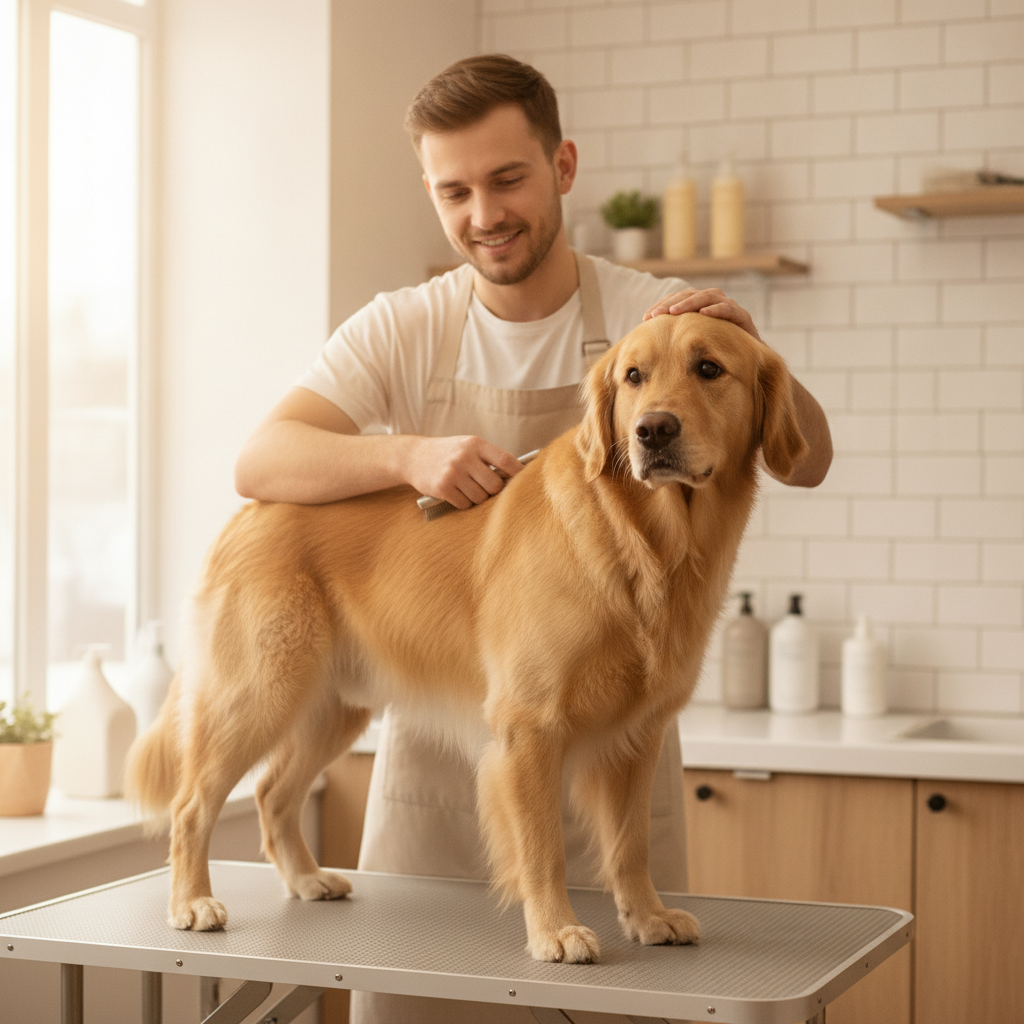
- Supportive Holds: Gently support the dog with your body or arm, making it feel secure rather than trapped.
- Non-Slip Mats: Use non-slip mats on the grooming table to help the dog feel more stable and reduce anxiety.
- Non-Verbal Communication: Use your body language to convey calmness and confidence.
#Dog Behaviour #Anxious Dogs #Grooming Techniques #Trust Building #Pet Professional
Run your grooming shop on PettoBook — 14-day free Pro trial, no card