Beyond Bribes: Mastering Counter-Conditioning for Anxious Dogs in Your Grooming Salon
Learn how to effectively use counter-conditioning and desensitization techniques to transform grooming into a positive experience for anxious dogs.
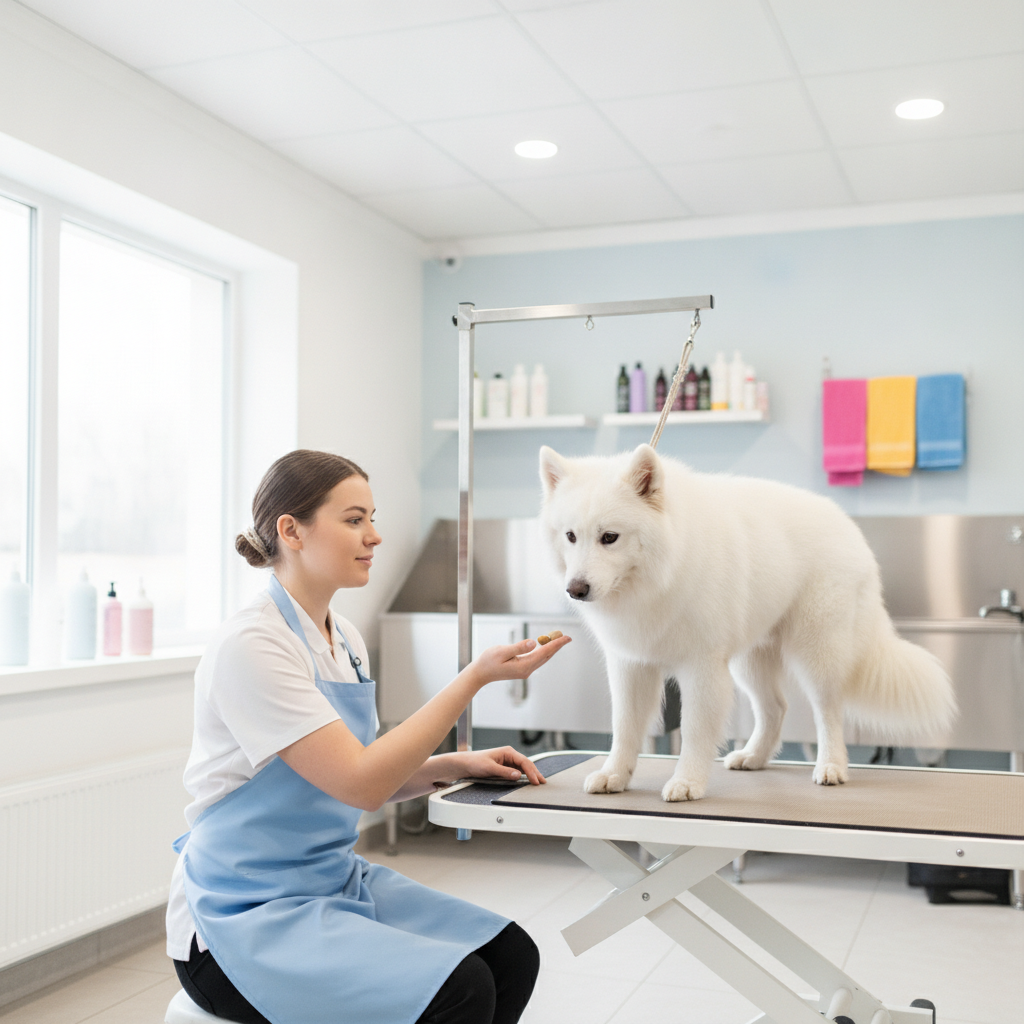
Anxious dogs are a common reality for Hong Kong groomers. Relying on restraint often increases fear, risks injury, and creates lasting negative associations with grooming. A more humane and effective approach uses counter-conditioning and desensitization. These techniques are powerful tools to transform a dog's emotional response, making grooming a positive, stress-free experience for everyone involved.
Understanding Counter-Conditioning and Desensitization
These two foundational behavioural modification techniques are best used together:
Counter-Conditioning (CC)
CC changes a dog's negative emotional response to a feared stimulus (e.g., grooming tools, table, handling) into a positive one. This is done by consistently pairing the 'scary' stimulus with something the dog loves, like high-value treats, praise, or a favourite toy. The goal is to shift anxiety to anticipation of something good.
Desensitization (DS)
DS involves gradually exposing a dog to a feared stimulus at an intensity so low it doesn't trigger a fear response. The intensity increases only when the dog remains calm. For groomers, this means starting with the sight of clippers from afar, then the distant sound, then a light touch, always ensuring comfort. Combined, CC and DS allow dogs to associate frightening elements with positive rewards, introduced at a manageable pace.
Benefits for Your Salon
- Enhanced Safety: Reduces risk of bites/scratches for pets and groomers.
- Superior Grooming: Relaxed dogs allow for more precise work, leading to higher quality finishes.
- Stronger Client Loyalty: Owners appreciate compassionate care, fostering trust and repeat business.
- Positive Environment: Less stress for dogs means a more harmonious salon for your team.
Practical Steps for Fear-Free Grooming
Patience and keen observation are key:
- Identify Triggers: Observe body language to pinpoint specific anxieties (e.g., clippers, dryers, nail trims).
- Start Small, Reward Big: Introduce the trigger at its lowest intensity (e.g., show clippers from distance). Immediately follow with a high-value treat. Repeat until no fear.
- Respect Their Pace: If stress signals appear (lip licking, yawning), you've gone too fast. Revert to an easier step.
- Consistent Pairing: Every gentle touch or tool sound should be immediately paired with a positive reward.
- Break Down Tasks: Deconstruct complex tasks into tiny, achievable steps (e.g., one nail clip, then reward).
- Educate Owners: Explain your methods and suggest home 'homework' (e.g., gentle brushing with treats) to reinforce positive associations.
Conclusion
Integrating counter-conditioning and desensitization is a strategic investment in dog welfare and salon success. Prioritizing emotional comfort creates safer, more pleasant experiences, building your reputation as a compassionate, professional establishment in Hong Kong's competitive pet care industry.
#Dog Behaviour #Grooming Techniques #Anxious Dogs #Counter-Conditioning #Desensitization