Advanced Dematting Strategies: Protecting Pet Skin and Preserving Coat Health
Learn safe and effective techniques to tackle matted pet coats, protect skin health, and elevate your professional grooming skills.
Understanding the Challenge of Matted Coats
Matted coats are one of the most common and challenging issues professional groomers face. Beyond aesthetic concerns, severe matting can cause significant discomfort and health problems for pets, including skin irritation, infections, limited mobility, and even hidden parasites. As grooming professionals, our primary responsibility is the pet's welfare. Mastering advanced dematting techniques is crucial not only for delivering high-quality results but, more importantly, for ensuring a safe and stress-free experience for our furry clients.
Deciphering Mat Formation and Types
Mats form when shed hair becomes intertwined with live hair, often exacerbated by friction, lack of regular brushing, moisture, or static electricity. Understanding the different types of mats is the first step towards effective treatment:
- Surface Mats: Looser tangles primarily affecting the outer layer of the coat. These are generally easier to brush out.
- Tight Mats: Denser, more compact knots that are closer to the skin, often forming behind ears, under legs, or around the tail.
- Pelted Coats: The most severe form, where mats are tightly woven and form a solid, felt-like layer against the skin. This condition often requires shaving for the pet's safety and comfort.
The Crucial Role of Pre-Groom Assessment
Before attempting any dematting, a thorough hands-on assessment is paramount. Gently feel the pet's entire coat, identifying the location, size, and severity of all mats. This assessment helps you determine if dematting is feasible and humane, or if shaving is the only safe option. Always communicate your findings and recommended approach clearly with the pet owner, explaining the potential risks of dematting versus shaving.
Essential Tools for Safe Dematting
Having the right tools is half the battle. Invest in high-quality equipment designed for safe and effective dematting:
- Slicker Brushes: Various sizes and pin stiffness for different coat types. Use a softer slicker for sensitive areas.
- Dematting Combs/Rakes: Specifically designed to cut through or gently separate mats without pulling. Use with extreme caution and never against the skin.
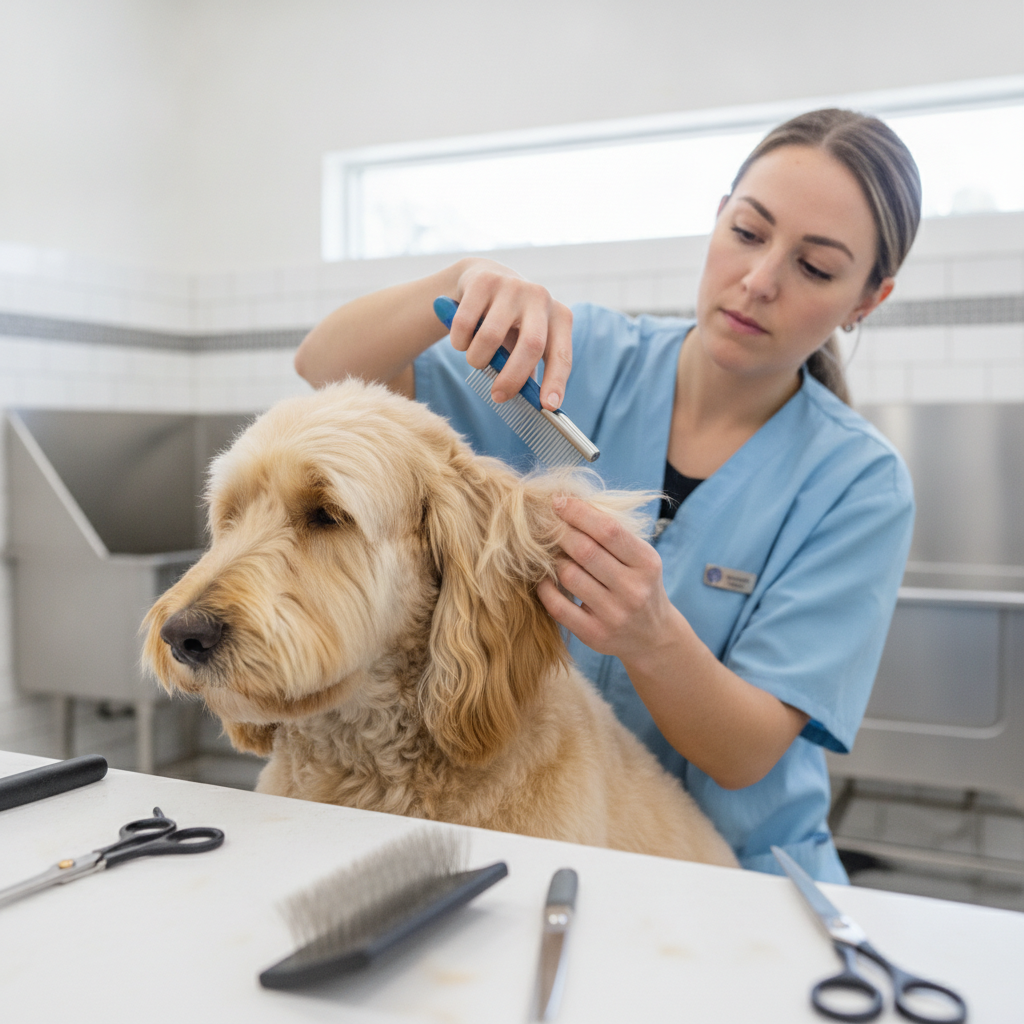
- Greyhound Combs: Metal combs with widely spaced teeth on one end and finer teeth on the other, excellent for line brushing and checking for residual tangles.
- Blunt-Tip Scissors: For carefully splitting mats or removing small, isolated ones. Always point away from the skin.
- Conditioning/Detangling Sprays: Essential for lubricating the hair, making mats easier to separate and reducing static.
Mastering Safe Dematting Techniques
Patience and a gentle touch are key. Never pull or rip at mats, as this causes pain and can damage the skin. Follow these steps for safe dematting:
- Apply Detangler: Liberally spray a good quality detangling or conditioning product onto the matted area. Let it soak for a few minutes.
- Sectioning: Work on one small section at a time. Use a comb to isolate the mat, holding the hair at the base near the skin to prevent pulling.
- Line Brushing: Start at the very tip of the hair and work your way down to the skin, brushing in small strokes. For tight mats, you might use the edge of a slicker brush or a dematting rake carefully.
- Splitting Mats: For larger, flatter mats, you can use blunt-tip scissors to carefully cut into the mat horizontally or vertically, dividing it into smaller, more manageable sections. Always keep the scissor tips parallel to the skin and only cut a small portion at a time.
- Gentle Combing: Once the mat feels looser, switch to a greyhound comb to gently work out remaining tangles. The wider teeth should go through easily before moving to finer teeth.
- Know When to Stop: If the dematting process is causing significant stress, pain, or irritation to the pet, or if the mats are too close to the skin, it’s always safer and more humane to shave the coat.
Aftercare and Client Education
After a successful dematting session, inspect the pet's skin for any irritation or abrasions. Apply a soothing balm or conditioner if needed. Crucially, educate the owner on preventive measures: the importance of regular brushing at home with the correct tools, consistent professional grooming appointments, and the benefits of specific conditioners or detangling sprays. Providing a clear grooming schedule tailored to their pet's coat type can significantly reduce future matting issues.
#Pet Grooming #Dematting Techniques #Coat Care #Professional Skills